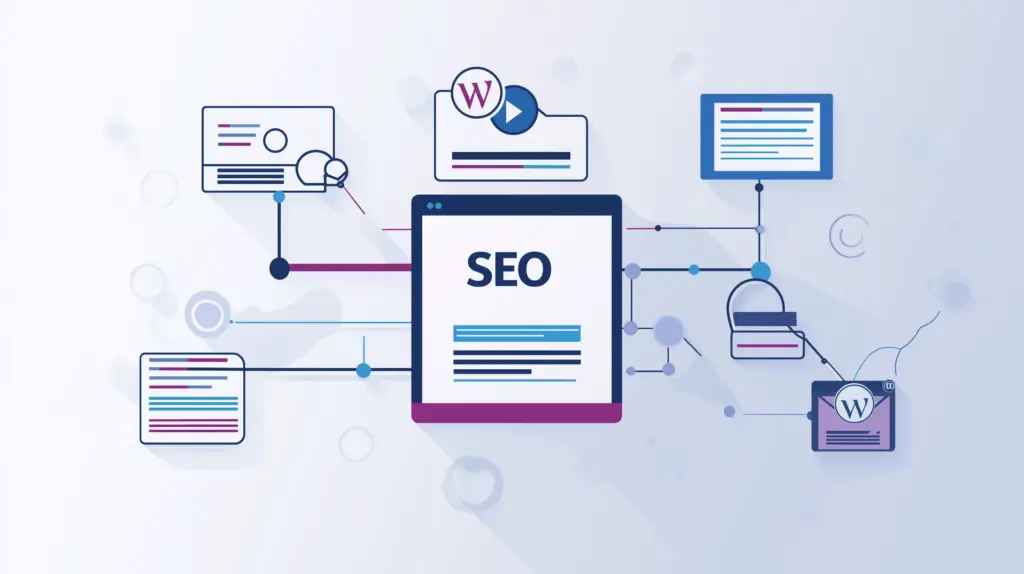

SEO success isn’t just about stuffing keywords or chasing backlinks—it’s about achieving real, sustainable search engine optimization (SEO) success. Your website’s structure, site speed, internal linking, and regular maintenance all contribute to how well search engines and visitors navigate and trust your site. If you’re not optimizing these areas, you’re missing out on a massive opportunity to boost visibility and user experience.
The Power of Website Structure for SEO Success
Website Structure Essentials
Think of your website like a well-organized library. Imagine searching for a cookbook, but instead, you find history books and sci-fi novels mixed in. Frustrating, right? The same applies to your website. A structured, easy-to-navigate site helps visitors (and search engines) find content effortlessly. The result? Better rankings, improved user experience, and a lower bounce rate. Plus, Google loves a site that makes sense—so why not make it easy for them to give you a boost?
Search engines prioritize well-structured websites, and a strong website structure is key to Google ranking success. A logical, hierarchical layout makes it easier for search bots to crawl and index your content, while also improving navigation for users.
✅ Internal linking: Guides search engines and users to key pages, improving discoverability and engagement. Recommended tool: Yoast SEO for automated internal linking suggestions.
✅ Clear navigation: A well-organized menu and breadcrumb navigation reduce bounce rates and enhance user experience. Consider using WP Breadcrumb for improved navigation.
✅ URL structure: Clean, descriptive URLs improve readability and SEO. Use a tool like Rank Math SEO to optimize permalinks.
For more insights, check out Faster Google Indexing with Better Site Structure and Internal Linking and Website Navigation & SEO: Boost Your Rankings with Smart Site Structure.
Pro Tip:
🔗Mastering Responsive Typography: The Ultimate Guide to Using Clamp() in CSS

Internal Linking: The Key to Strong Website Navigation & SEO
How to Optimize Internal Linking
Internal linking is like setting up signposts across your website. Imagine you’re in a massive shopping mall without a directory—how would you find the food court? A strategic internal linking plan ensures your most valuable pages don’t get lost while also passing SEO value across your site.
A well-planned internal linking strategy distributes page authority, improves search engine optimization (SEO), and enhances user engagement.
✅ Linking to high-value pages: Strengthen key content by linking related pages. Consider using Link Whisper for automated linking suggestions.
✅ Using descriptive anchor text: Instead of generic phrases like “click here,” use keyword-rich text to improve relevance and usability.
✅ Keeping a balanced link structure: Avoid excessive links on a single page; distribute them naturally for better crawlability.
Learn more in The Ultimate Guide to Site Structure & Internal Linking and check out Donald Trump’s Website Design Playbook: 6 Lessons & Laughs for a fun take on web design.
Website Maintenance: Keeping Your User Experience & Rankings Intact
Key Website Maintenance Strategies
Imagine buying a brand-new car and never getting it serviced. Eventually, it would break down. Websites are no different—regular site maintenance is essential for Google ranking and user trust.
✅ Regular updates: Keep WordPress core, themes, and plugins up to date with tools like ManageWP.
✅ Fixing broken links: Dead links hurt SEO and user experience—use Broken Link Checker to identify and fix them.
✅ Speed optimization: Improve site performance with caching plugins like WP Rocket and image compression tools like Smush.
Avoid critical maintenance mistakes by reading 7 Deadly Sins of WordPress Maintenance and The 7 Deadly Sins of WordPress Maintenance (And How We Save You from Them).

The AI Factor: Boosting SEO with Smart Content Creation
Maximizing AI for SEO Success
AI is like a personal assistant for your AI content creation strategy, helping streamline content strategy and search engine optimization (SEO). It can generate ideas, optimize keywords, and assist with writing—but human oversight is crucial to maintaining quality.
✅ Content generation efficiency: AI tools like ChatGPT and Jasper AI help produce content faster.
✅ SEO optimization: AI-assisted platforms like Surfer SEO analyze trends and improve content rankings.
✅ Balancing AI with human editing: AI-generated content must be reviewed for originality and readability to avoid SEO penalties.
Discover the role of AI in SEO with AI Content Creation: A Blessing or a Curse? and AI-Powered Content Creation: Efficiency With Creativity.
Pro Tip:
🔗Mastering Responsive Typography: The Ultimate Guide to Using Clamp() in CSS

Conclusion
How We Arrived at These Conclusions
SEO success is not about a single tactic but a combination of strategic actions working together. Through this guide, we’ve examined the essential components that contribute to long-term success.
A well-structured website plays a fundamental role in SEO success, ensuring search engines and users can seamlessly navigate your content. When content is organized properly, both users and search engines can efficiently navigate and understand your site, leading to better engagement and improved rankings.
An effective internal linking strategy is essential for distributing page authority, improving user experience, and ensuring search engines recognize the most important pages on your site. by guiding users to relevant content and distributing page value across your site, signaling to Google which pages deserve higher rankings.
Regular site maintenance keeps your website in optimal condition, avoiding penalties from search engines and frustrating user experiences.
Finally, AI-powered content creation provides efficiency in content generation and keyword optimization, but it must be carefully managed to ensure quality, relevance, and authenticity.
By implementing these best practices, you can enhance your Google rankings, drive organic traffic, and maintain a strong online presence.
SEO FAQs: Your Most Pressing Questions Answered
1. Why is internal linking important for SEO?
Internal links help search engines discover pages, distribute ranking power, and improve navigation for visitors.
2. How often should I update my website for SEO?
Regular updates are crucial—check plugins, themes, and content at least monthly to maintain performance and security.
3. Does AI-generated content help or hurt SEO?
AI can speed up content creation, but it needs human editing to ensure quality and avoid SEO penalties.
4. What are the biggest mistakes in website maintenance?
Ignoring updates, neglecting broken links, and failing to optimize site speed can harm your SEO and user experience.